
 Français
10 Things to Know Before Trying THCA Concentrates for the First Time
THCA concentrates are getting a lot of attention, especially among people exploring modern cannabis products for the first time. They can look clean, refined, and less intimidating than traditional flower, but that can create a false sense of simplicity. The truth is that THCA concentrates deserve caution, respect, and a clear understanding of how they work before you try them.
If you are new to this category, the most important thing to know is that THCA is the acidic precursor to THC. On its own, THCA is not known for producing the same intoxicating effects associated with THC. Once it is heated, however, it changes into THC through a process called decarboxylation. That means dabbing, vaping, or smoking a THCA concentrate can produce a strong and fast-acting psychoactive effect.
If you want to understand how concentrate formats compare in the broader cannabis world, you can also explore our guides on shatter, rosin and water hash, traditional hashish production methods, and what shatter is and how it is made.
This guide breaks down 10 practical things beginners should know before trying THCA concentrates for the first time. The goal is not to dramatize the experience or oversell it. It is to help you make a more informed, safer decision and avoid the common mistakes that often happen when first-time users underestimate how strong concentrates can be.
1. THCA is not the same thing as THC until heat is involved
Many beginners see “THCA” on a label and assume it must be very different from THC in all situations. In reality, the distinction matters most before the product is heated. THCA is a naturally occurring cannabinoid acid found in raw cannabis. When you apply heat through smoking, vaping, or dabbing, THCA converts into THC.
That matters because the experience people associate with being “high” comes from THC, not raw THCA. So even if the label emphasizes THCA, the actual user experience can still be strongly intoxicating once the concentrate is consumed with heat.
2. THCA concentrates are usually much stronger than flower
One of the biggest mistakes first-time users make is assuming concentrates are just a slightly stronger version of flower. They are often far more potent. Cannabis flower may feel familiar and easier to pace, but concentrates can deliver a much larger amount of cannabinoids in a much smaller amount of material.
That difference in potency is exactly why beginners should not approach THCA concentrates the same way they would approach a joint, pipe, or dry herb vaporizer session. The strength jump can be significant, and the effects may come on faster than expected.
3. Your flower tolerance may not prepare you for concentrates
Some people assume that because they are comfortable with cannabis flower, they are automatically ready for concentrates. That is not always true. Even regular flower users can find concentrates surprisingly intense, especially when the product is inhaled in a way that delivers a dense dose very quickly.
This is why prior cannabis experience does not always translate neatly into concentrate experience. A person who feels fully in control of a flower may still find a concentrate overwhelming if they start with too much.
4. Start with the smallest amount possible
For a first experience, smaller is better. A tiny amount is enough to learn how your body responds. Taking a large dab or multiple pulls right away can make the session far more intense than intended, and once that happens, there is no quick reset button.
Beginners often benefit from thinking in terms of testing, not chasing. The first session should be about understanding onset, intensity, and duration. Starting low helps reduce the chance of anxiety, discomfort, or a negative first impression.
5. The method of consumption changes the experience
Not all THCA concentrate experiences feel the same. Dabbing tends to be intense and fast-acting. Vaping concentrates can also hit quickly, though the exact feel depends on the device, temperature, and product format. Smoking a concentrate mixed with flower may feel different again.
For beginners, this matters because the delivery method influences both the speed and strength of the effects. Fast-delivery methods can be harder to pace if you are inexperienced. Understanding your device and using it conservatively is part of using concentrates responsibly.
6. Product quality matters more than many people think
A concentrate is only as trustworthy as the source behind it. Beginners should pay attention to product quality, transparency, and consistency rather than buying based only on appearance or hype. A product that looks appealing is not automatically well-made.
When possible, look for products from businesses that provide clear labelling, batch information, and accessible lab testing. Reliable testing can help verify cannabinoid content and may also help screen for unwanted contaminants. That does not replace caution, but it does help you make a more informed purchase.
7. Homemade solvent extraction is not a beginner project
Some newcomers become curious about making concentrates at home after seeing videos or quick tutorials online. That is a serious mistake when flammable solvents are involved. Solvent-based extraction can be dangerous and is not something a beginner should treat casually.
If you are interested in concentrates, focus first on understanding commercially prepared products from reputable sources rather than experimenting with risky extraction methods. Curiosity is normal, but safety should come first.
8. Set and setting still matter, even with concentrates
Because concentrates are compact and refined, some people forget that the experience still depends heavily on context. Your environment, stress level, hydration, recent meals, and overall comfort can influence how the session feels.
For a first time, choose a calm and familiar place. Avoid adding pressure by trying a THCA concentrate at a party, before errands, or in any situation where you need to stay sharp. Give yourself room to observe the effects without distractions or obligations.
9. Do not drive or mix concentrates with alcohol
This point is simple but important. Once heated and consumed, THCA concentrate can impair coordination, judgment, and reaction time because of its conversion to THC. That makes driving or operating equipment a bad idea.
It is also wise to avoid mixing concentrates with alcohol or other intoxicating substances, especially if you are new to cannabis. Combining substances can make the overall experience less predictable and harder to manage.
10. Legality and product rules are not always straightforward
One reason THCA products confuse people is that the legal discussion around them can be technical and jurisdiction-specific. Labels, testing standards, intended use, and local rules do not always line up in a simple way. A product being marketed one way does not mean the legal interpretation is identical everywhere.
That is why beginners should avoid making assumptions based only on social media, marketing language, or product names. Check the laws and regulations that apply where you live before buying, possessing, or using THCA concentrates.
What first-time users should do instead of rushing in
If you are curious but cautious, that is a good mindset. The smartest first step is to treat THCA concentrates as a high-potency cannabis format, not as a novelty. Read labels carefully, choose a trusted source, start with a very small amount, and give the experience time before deciding whether to take more.
It also helps to keep expectations realistic. A positive first experience usually comes from patience, preparation, and moderation rather than from trying to feel the strongest effects possible. Concentrates are not automatically better than flower; they are simply different, and for beginners, they can be much less forgiving.
Final thoughts on trying THCA concentrates for the first time
THCA concentrates may appeal to beginners because they seem modern, pure, and efficient, but they are best approached with care. Once heated, THCA becomes THC, and that means the effects can be powerful. The more you understand before your first session, the better your chances of having a manageable and informed experience.
For most first-time users, the best rule is easy to remember: start very small, stay in a safe setting, and do not underestimate the strength of concentrates.
If you are new to cannabis more broadly, you may also find our growing cannabis for beginners guide, our Cannabis Seeds for Beginners collection, and our main Cannabis Seeds Blog helpful for building a stronger foundation.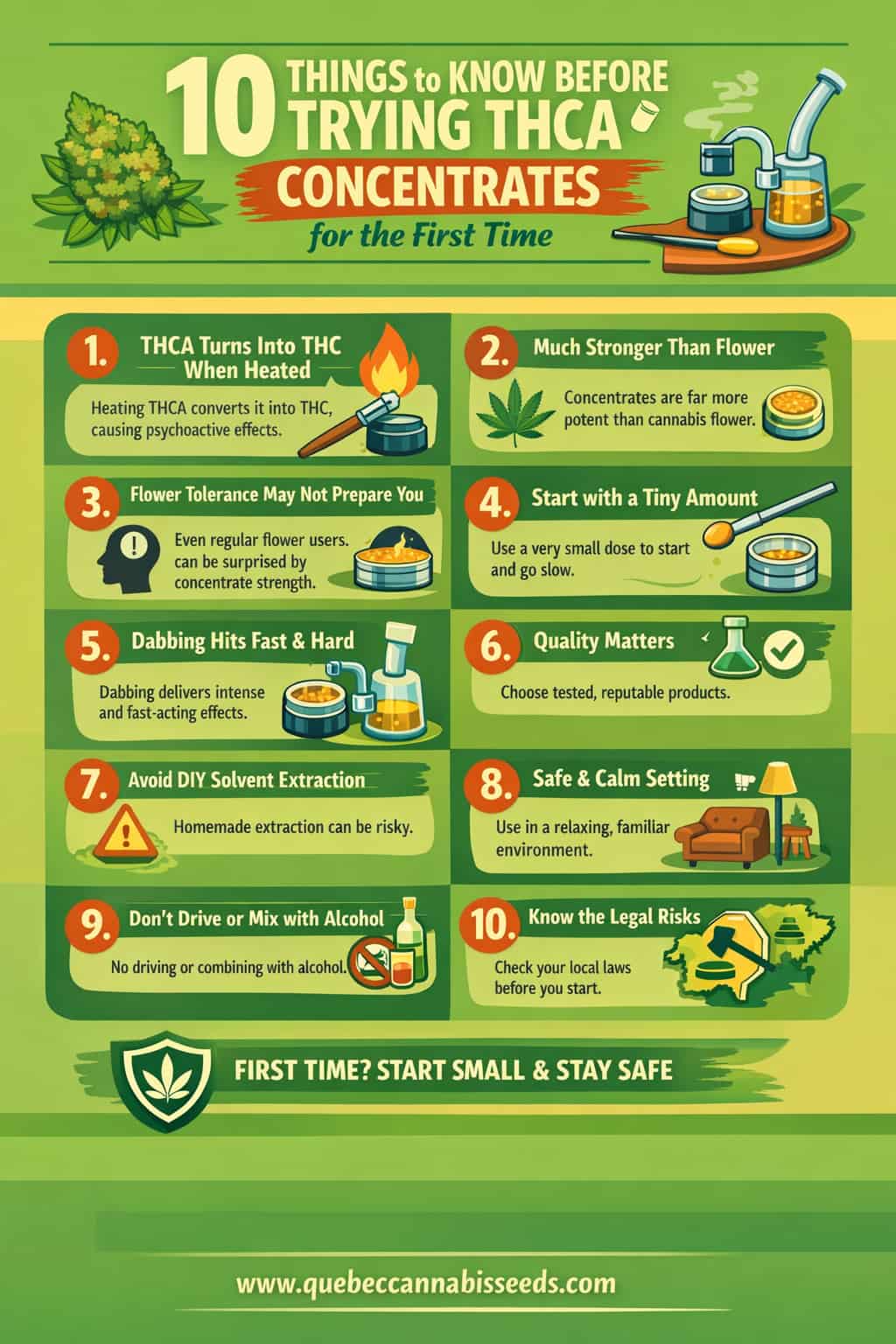
FAQ: THCA Concentrates for First-Time Users
Do THCA concentrates get you high?
THCA itself is not usually described the same way as THC, but once THCA concentrate is heated by dabbing, vaping, or smoking, it converts into THC. That means the effects can become intoxicating and feel much stronger than some beginners expect.
Are THCA concentrates stronger than cannabis flower?
In many cases, yes. Concentrates are designed to deliver a much denser cannabinoid profile than standard flower, which is why beginners should be cautious and avoid treating them like a regular smoking session.
What is the best way to try THCA concentrates for the first time?
The best approach is to start with the smallest amount possible in a calm setting and wait before taking more. Beginners usually do better when they focus on learning how the product feels rather than chasing a strong first experience.
Is dabbing a good option for beginners?
Dabbing can be very intense for a first-time user because the effects may arrive quickly and feel strong. Some beginners prefer slower, more controlled approaches, but whichever method you choose, moderation matters.
Are THCA concentrates legal everywhere?
No. Laws can vary depending on where you live, how the product is tested, and how local rules treat total THC potential. Always check the laws in your area before buying or using THCA concentrates.
Can I drive after using THCA concentrates?
No. Once heated, THCA converts into THC, which can impair judgment, coordination, and reaction time. Do not drive or operate equipment after using a concentrate.
Disclaimer: This article is for informational purposes only and does not constitute medical or legal advice. Cannabis laws vary by jurisdiction, and product effects can differ from person to person. Always review your local laws and consult a qualified professional if you have health-related concerns.