
 Français
 Purple Kush Strain Review – Effects, Flavor, and Growing Guide
Purple Kush is a pure indica legend from Oakland, California, created by crossing Hindu Kush with Purple Afghani. The result is a compact, resin-heavy marijuana strain with deep purple buds, sweet grape-and-berry flavor, and a powerful, body-melting stone that’s perfect for nighttime use.
For more strain profiles like this one, see our Cannabis Strains Review section, the index of all our strain articles.
Genetics & Lineage
A note on the numbers in this article: harvest dates, flowering times and yields are ranges, not promises. They vary depending on growing conditions: the grower, the method and the season's weather. "Mold resistant" means mold tolerant: less prone to mold and slower to be affected. No strain is 100% mold resistant. How we set these numbers →
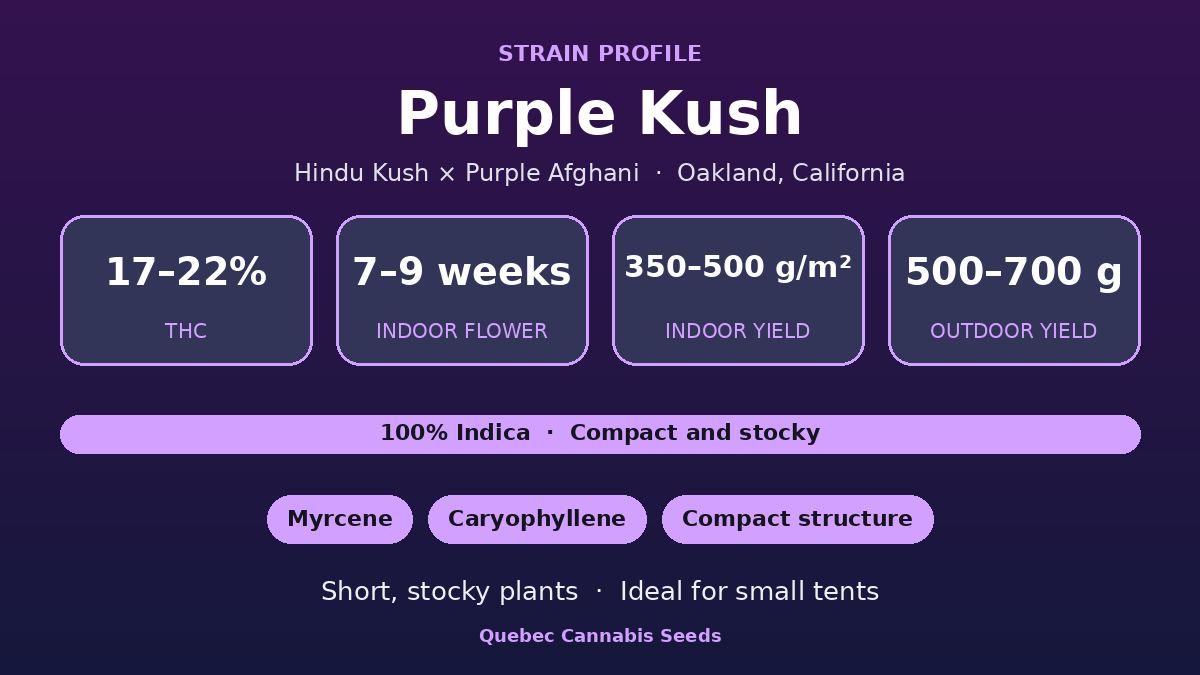
Type: 100% indica
Parents: Hindu Kush x Purple Afghani
Hindu Kush contributes landrace toughness, heavy resin, earthy hash notes, and that classic “Kush” body effect. Purple Afghani brings the eye-catching purple coloration, sweet fruity terpenes, and an extra sedative punch. Together, they produce a marijuana strain that’s all about relaxation, flavor, and color.
Not sure what really separates indica from sativa and hybrid? Read Sativa vs Indica vs Hybrid: What’s the Real Difference?.
Appearance
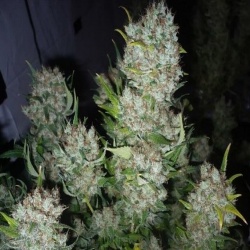
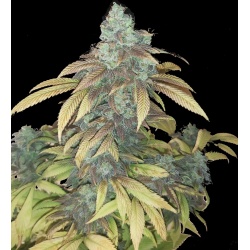
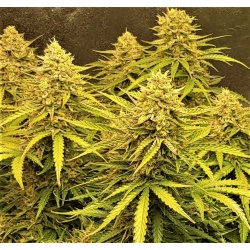
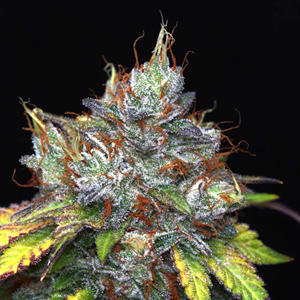
Purple Kush has serious bag appeal:
Color: Dense flowers in shades of dark green to deep purple, with darker sugar leaves and bright orange pistils. Cooler night temperatures near harvest can intensify the violet tones.
Structure: Short, stocky indica structure with chunky, golf-ball-like nugs—ideal for small tents and stealth setups.
Trichomes: A heavy coating of milky white crystals that makes the buds look like frosted grapes and perfect for hash or rosin pressing.
Well-grown Purple Kush weed looks like it was designed for close-up photos: tight, resinous, and vibrant.
Terpenes, Aroma & Flavor
Terpene Profile
Common dominant terpenes in Purple Kush include:
Myrcene – earthy, musky, strongly relaxing; a classic indica terp
Caryophyllene – spicy, peppery, adding depth to the Kush profile
Pinene & limonene – pine freshness and light citrus lift that keep the flavor from feeling too heavy
This combination helps explain both the deep body stone and the rich, dessert-style flavor that fans love.
Aroma – How Purple Kush Smells
Open a jar of Purple Kush and you’ll usually get:
Deep earthy and woody base
Strong notes of sweet grapes, dark berries, and red wine
Subtle hash and spice underneath
It smells like a mix of grape candy, forest floor, and old-school Afghani hash.
Flavor – How Purple Kush Tastes
On the palate, Purple Kush pot is smooth and flavorful:
Inhale: sweet grape and berry layered over an earthy Kush base
Mid-palate: hints of wood, spice, and classic hash flavors
Exhale: lingering grape / red-wine sweetness with earthy undertones
Vaped at lower temperatures, it leans more toward candy-like fruit; at higher temps, the earthy, spicy Kush side dominates.
Potency & Cannabinoid Profile
Purple Kush is firmly in the strong indica category, even if it’s not always the highest-THC strain on your menu.
THC: commonly around 17–22%, with some phenotypes and breeder lines reaching into the mid-20s when grown well.
CBD: generally low (<1%), so this is a THC-forward strain.
For many users, that means powerful but manageable—strong enough for experienced smokers and medical users, but still approachable for beginners who keep the dose small.
Effects & Overall Experience
Mental Effects
Purple Kush is a “switch off the day” kind of weed:
Warm, gentle euphoria
Quiet, peaceful headspace
Stress and racing thoughts fade into the background
It doesn’t usually produce an intense cerebral buzz. Instead, it brings a soft mental focus and emotional calm.
Physical Effects
The body stone is where Purple Kush really shines:
Heavy, soothing relaxation from head to toe
Muscles loosen; physical tension slowly melts away
Strong couch-lock and sleepiness at moderate to high doses
This is not a productivity strain. It’s made for late-night movies, music, snacks, and eventually, bed.
Potential Medical Uses
(Not medical advice – based on common user reports.)
Many medical and wellness users choose Purple Kush marijuana or pot for:
Chronic pain & muscle tension – deep body relaxation that can ease aches, spasms, and soreness
Insomnia & sleep issues – strong sedating finish that helps with falling asleep and staying asleep
Stress & anxiety – comforting, “wrap-you-in-a-blanket” calm for many users
Appetite & nausea – classic “munchies” and stomach-soothing effects reported by some
Anyone using Purple Kush for medical purposes should start with a low dose, monitor how they feel, and speak with a healthcare professional if they have questions or take other medications.
Growing Purple Kush
Purple Kush is a popular choice for beginner and intermediate growers who want a compact, forgiving indica with impressive bag appeal.
Grow Difficulty
Most growers rate Purple Kush as easy to medium:
Robust landrace-influenced genetics
Good resistance to minor stress and beginner mistakes
Can be grown successfully both indoors and outdoors in the right climate
For a broader, step-by-step look at germination, nutrients, and training, see our Marijuana Growing Guide.
Plant Structure
Height: Short to medium (often 60–120 cm indoors)
Shape: Bushy with lots of side branches, forming a compact shrub-like plant
Buds: Dense colas that need decent airflow to avoid mold, especially late in flower
This structure is perfect for 2×2 or 2×4 tents, Sea of Green (SOG), or small SCROG setups where vertical space is limited.
Flowering Time & Yield
Indoor flowering time: about 7–9 weeks
Outdoor harvest: usually late September to early October in the Northern Hemisphere
Under good conditions, you can expect:
Indoors: roughly 350–500 g/m² under strong lighting and basic training
Outdoors: around 500–700 g per plant in warm, sunny climates with large pots or in-ground planting
Grower Tips
Keep humidity lower in late flower to protect dense buds from mold and mildew.
Use topping, LST, and light defoliation to open up the canopy and improve airflow.
Slightly cooler nights during the last 2–3 weeks of flowering can help bring out the deepest purple tones.
If you are growing your very first plants, pair this strain with our article Growing Cannabis for Beginners for a full beginner roadmap.
Frequently asked questions
(For medical users, beginners & growers.)
1. Is Purple Kush good for beginners?
Yes, but go slow.
Purple Kush is potent and very relaxing, but not usually overwhelming if beginners:
Take one or two small puffs to start
Wait at least 20–30 minutes before using more
Keep it for evening or nighttime until they understand their tolerance
Because it doesn’t have a racy head high, many new users find it easier to handle than strong sativa-leaning strains.
2. Is Purple Kush good for sleep and pain?
Many medical users and reviewers report that Purple Kush helps with both:
Sleep: The sedating body stone makes it a popular bedtime choice.
Pain: Its strong physical relaxation may ease chronic pain, muscle tension, and spasms.
Everyone’s body is different, so dosing should be cautious at first, and any medical use should be discussed with a healthcare professional.
3. What are the most common side effects?
Common side effects of this marijuana strain include:
Dry mouth and dry/red eyes
Strong drowsiness or couch-lock
Increased appetite (munchies)
At higher doses, some users report dizziness, heavy sluggishness, or occasional anxiety. Using Purple Kush in a calm environment, staying hydrated, and avoiding overconsumption helps minimize negatives.
4. Does Purple Kush always turn purple?
Not always, but it often can. Purple coloration depends on:
The specific phenotype
Temperature (cooler nights near harvest encourage purple tones)
Overall plant health and nutrient balance
Even if buds lean greener, they can still be true Purple Kush if the aroma, flavor, and effects match the expected profile.
5. How long does Purple Kush take to flower, and when should I harvest?
Indoors: expect around 7–9 weeks of flowering.
Outdoors: most growers harvest in late September to early October, depending on climate and weather.
Growers typically look at trichomes (cloudy vs amber) and pistil color to decide the perfect harvest moment. For a detailed, visual breakdown of harvest timing, especially outdoors, read The Perfect Time to Harvest Outdoor Cannabis Plants – A Complete Grower’s Guide.
Wrap-Up
Purple Kush is a must-have pure indica in any serious collection: purple, tasty, potent, and relatively easy to grow. With its sweet grape flavor, strong body stone, and compact, resin-loaded buds, it works beautifully as a nighttime strain for both recreational and medical users—and as a reliable, rewarding cultivar for home growers.