
 Français
 Seed Basics: Picking the Right Genetics for Your Goals
Choosing cannabis seeds is a lot like choosing the blueprint for your entire grow. Get the genetics right, and the rest of your setup feels easier—watering, feeding, training, even harvest timing. Choose the wrong type for your space or climate, and you’ll spend the whole run fighting the plant instead of guiding it.
If you’re brand new, you may want to read Growing Cannabis for Beginners first, then come back here to choose genetics with confidence.
This guide breaks down how to choose marijuana / weed / pot seeds based on real-world factors: your grow space, your timeline, your tolerance for “finicky,” and what kind of effects you actually want at the end.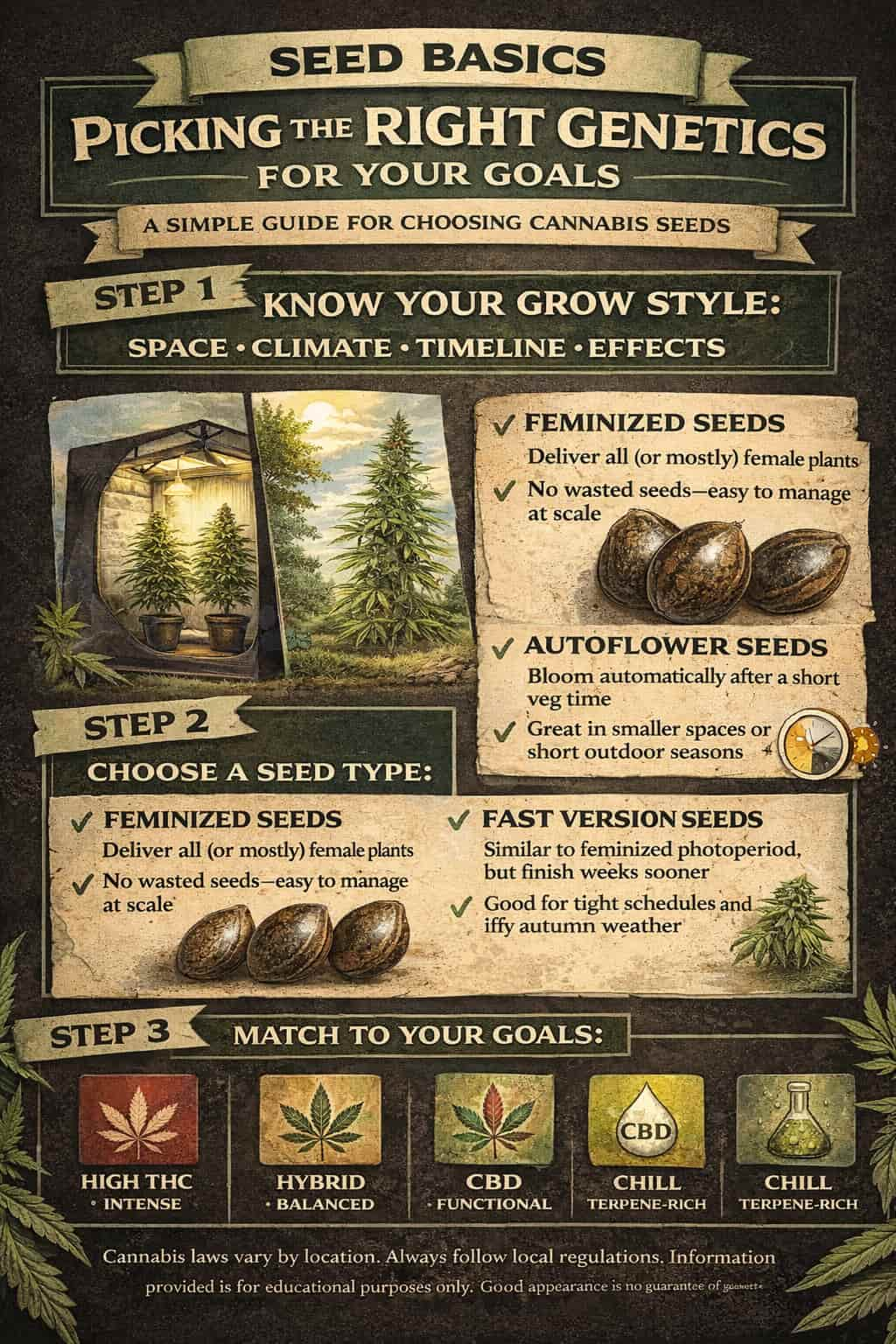
Educational horticulture content. Follow your local laws and regulations.
Step 1: Start with your grow reality (not your dream)
- Indoor or outdoor?
- How much vertical space do you have? (short tent vs tall room)
- Can you control climate? (heat, humidity, airflow)
- How long can you wait? (fast harvest vs patience for bigger yields)
- How many plants do you want to manage? (one big plant vs several smaller ones)
Tip: If you’re still at the “how do I even start?” stage, use this guide next:How To Start Cannabis Seed.
Step 2: Choose the plant “type” that matches your timeline
Option A: Photoperiod seeds (the classic)
Photoperiod plants stay in veg until the light cycle changes (commonly to 12/12 indoors) or until outdoor seasons shift. This gives you more control over plant size and training.
Option B: Autoflower seeds (the fast, simple route)
Autoflowers flip to flower automatically after a short veg window. They’re great for faster harvests and short outdoor seasons, but early stress can reduce size.
If you’re focusing on autos, see:Best Autoflower Marijuana Seeds in Canada.
Option C: “Fast Version” seeds (the middle ground)
Fast Version genetics are usually photoperiod plants bred for shorter flowering time—good if you want control but need a quicker finish.
Step 3: Choose feminized vs regular (your “seed efficiency” decision)
Feminized seeds
Feminized seeds are bred to produce female plants (the bud-producing plants) with high reliability—usually the easiest choice for a straightforward harvest.
Curious how feminization works? Read:How To Feminize Cannabis Seeds.
Regular seeds
Regular seeds can produce male or female plants and are often used for breeding or phenotype hunting.
If you want to understand the “male plant” side of the garden, see:Understanding the Role of Male Weed Plants.
Step 4: Pick effects and cannabinoid goals (don’t guess)
Instead of choosing based on strain names alone, decide what you want:
- Relaxation / nighttime
- Daytime / creativity / social
- Balanced hybrid
- CBD-forward / functional wellness
Step 5: Match flowering time to your schedule (and your climate)
Flowering time isn’t just a stat—it’s your risk level. Outdoors, faster-finishing genetics can help you beat cold/wet weather. Indoors, stable conditions give you more options.
Step 6: Match genetics to your grow method
Your medium matters. If you’re deciding between soil, coco, and hydro, start here:The Ultimate Guide to Choosing the Best Soil for Cannabis Growth.
And if you’re planning your feeding strategy early, this guide helps:Best Nutrients for Cannabis Plants in 2025 (Soil, Coco & Hydro Guide).
Step 7: Use a simple decision framework (copy/paste)
Indoor beginner, small tent
- Feminized photoperiod (or beginner-friendly auto)
- Moderate height genetics
- Reliable finish
Outdoor, short season / weather risk
- Autoflower or Fast Version
- Hardy structure
- Faster finish
One-plant grow, want bigger yield
- Feminized photoperiod
- Longer veg + training
- Canopy focus
FAQ
How many seeds should I start?
If you’re selecting the best plant from seed, pop more than one. If you want a simple harvest, start with the number of plants you can manage comfortably.
Are autoflowers always easier?
They’re often easier logistically (no light-flip), but can be less forgiving if you stunt them early.
How long does germination take?
Most seeds sprout within days, but conditions matter. Read:How To Germinate Cannabis SeedsandHow Long For Cannabis Seeds to Sprout.