
 English
Comment faire pousser des têtes de cannabis violettes : obtenir des couleurs pourpres profondes
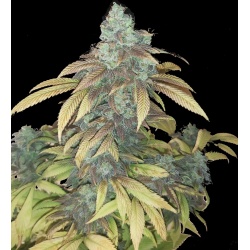
Les têtes de cannabis violettes comptent parmi les fleurs les plus spectaculaires qu’un cultivateur puisse produire. Les couleurs peuvent aller du lavande clair et du violet jusqu’au pourpre foncé, bordeaux, bleu et presque noir. Cependant, faire pousser des têtes de cannabis violettes ne consiste pas simplement à réduire la température ou à ajouter un engrais spécial.
La capacité d’un plant de cannabis à devenir violet dépend principalement de sa génétique. Les conditions environnementales peuvent ensuite influencer l’intensité avec laquelle ces couleurs violettes s’expriment.
Si vous souhaitez cultiver un magnifique cannabis violet, la meilleure stratégie consiste à commencer avec une génétique capable de produire des anthocyanines, maintenir des plantes en bonne santé pendant toute la culture, fournir un éclairage et une nutrition appropriés et permettre aux conditions environnementales de favoriser le développement naturel des couleurs pendant la floraison.
Dans ce guide, nous expliquons comment faire pousser des têtes de cannabis violettes, pourquoi le cannabis devient violet, à quel moment cette coloration apparaît généralement et quels mythes courants concernant le cannabis violet il vaut mieux éviter.
Pourquoi le cannabis devient-il violet ?
Les couleurs violettes, rouges, bleues et parfois presque noires observées sur le cannabis sont principalement produites par des pigments végétaux naturels appelés anthocyanines.
Les anthocyanines appartiennent à la famille des flavonoïdes. Elles sont également responsables de nombreuses couleurs rouges, violettes et bleues présentes dans des plantes et des fruits comme les bleuets, les raisins, le chou rouge et les mûres.
Des recherches effectuées sur Cannabis sativa ont identifié la cyanidine-3-rutinoside, également appelée kéracyanine, comme l’une des principales anthocyanines associées à la pigmentation violette des tissus du cannabis.
Les plants de cannabis contiennent également de la chlorophylle, qui produit leur couleur verte caractéristique.
À mesure que certaines plantes arrivent à maturité — particulièrement celles qui sont génétiquement prédisposées à produire beaucoup d’anthocyanines — l’équilibre entre la chlorophylle verte et les pigments colorés peut évoluer, permettant aux tons violets, rouges ou bleus de devenir beaucoup plus visibles.
La génétique est le facteur le plus important
Si votre objectif est de faire pousser des têtes de cannabis violettes, la génétique devrait être votre première considération.
Toutes les variétés de cannabis ne deviennent pas violettes.
Vous pouvez exposer une variété naturellement verte à des températures nocturnes plus fraîches, modifier sa nutrition et attendre jusqu’à la fin de la floraison, mais cela ne garantit pas l’apparition de têtes violettes.
Certaines génétiques produisent naturellement :
- Des calices violets
- Des feuilles résineuses violettes
- Des grandes feuilles pourpre foncé
- Des tiges bordeaux
- Des fleurs bleu-violet
- Un feuillage presque noir en fin de floraison
D’autres variétés restent vert vif pendant tout leur cycle de vie.
C’est pourquoi choisir une variété déjà reconnue pour ses couleurs est beaucoup plus fiable que d’essayer de forcer une variété verte à devenir violette.
Pour mieux comprendre l’origine des différentes couleurs du cannabis, consultez le guide QCS Variétés de cannabis colorées : bien plus que de simples fleurs esthétiques.
Lire l’article français sur les variétés de cannabis colorées
Choisir une génétique de cannabis violet
Le moyen le plus simple d’augmenter vos chances d’obtenir des fleurs violettes consiste à commencer avec des graines provenant d’une variété déjà reconnue pour ses caractéristiques pourpres.
Par exemple, les Purple Kush Graines de Cannabis Féminisées offertes par Quebec Cannabis Seeds proviennent de génétiques Hindu Kush et Purple Afghani et sont particulièrement reconnues pour leur feuillage et leurs fleurs aux teintes violettes.
D’autres familles génétiques couramment associées aux phénotypes colorés comprennent notamment :
- Purple
- Granddaddy Purple
- Purple Afghani
- Purple Punch
- Blackberry
- Blueberry
- Grape
- Et d’autres lignées sélectionnées pour leurs couleurs
Cependant, le nom d’une variété n’est pas une garantie absolue.
Même parmi plusieurs plantes provenant de la même variété, différents phénotypes peuvent apparaître. Une plante peut devenir extrêmement violette tandis qu’une autre demeure principalement verte avec seulement quelques reflets pourpres.
Cette variation est normale.
Les températures froides peuvent-elles rendre le cannabis violet ?
Oui, mais cette affirmation nécessite une précision importante.
Des températures plus fraîches peuvent favoriser l’accumulation d’anthocyanines chez les plants génétiquement capables de devenir violets, mais elles ne peuvent pas créer de génétique violette lorsqu’elle n’existe pas.
Des recherches contrôlées effectuées sur du cannabis violet ont montré que la température peut influencer l’accumulation d’anthocyanines.
Dans certaines conditions expérimentales et pour certaines génétiques, les niveaux d’anthocyanines étaient plus élevés lorsque les plantes étaient exposées à des températures légèrement plus fraîches comparativement à des conditions plus chaudes.
Cependant, des températures extrêmement froides ne produisent pas nécessairement de meilleurs résultats.
En pratique :
Plus frais ne signifie pas glacial.
Il ne faut pas choquer, geler ou stresser sévèrement vos plantes simplement dans l’espoir de les rendre violettes.
Utiliser une différence modérée entre les températures du jour et de la nuit
La coloration violette devient souvent plus visible pendant les dernières semaines de floraison, lorsque les températures nocturnes diminuent naturellement.
Les cultivateurs en intérieur peuvent reproduire partiellement ce changement saisonnier en permettant aux températures nocturnes de devenir modérément plus fraîches que celles de la journée.
Par exemple, plutôt que de maintenir la salle de culture extrêmement chaude 24 heures sur 24, vous pouvez conserver des températures saines durant la période d’éclairage et permettre une diminution raisonnable lorsque les lampes sont éteintes.
Le mot important est raisonnable.
Les plants de cannabis ont toujours besoin de températures favorisant :
- Un métabolisme sain
- Une bonne fonction racinaire
- Une absorption adéquate des nutriments
- Un bon développement des fleurs
Exposer volontairement les plantes à des températures extrêmement froides peut provoquer :
- Un ralentissement de la croissance
- Une réduction de l’absorption des nutriments
- Un stress racinaire
- Des dommages aux feuilles
- Des problèmes de développement des fleurs
- Une augmentation du risque de maladies
- Une réduction du rendement
Une belle coloration violette ne vaut pas la peine de sacrifier la santé de la plante.
Ne faites pas geler vos plants de cannabis
L’un des conseils les plus répandus sur Internet pour produire du cannabis violet consiste à exposer les plantes à un froid extrême juste avant la récolte.
Certains recommandent même d’utiliser de l’eau glacée, de placer de la glace autour des racines ou de réduire les températures nocturnes presque jusqu’au point de congélation.
Ces méthodes sont inutiles et peuvent endommager les plantes.
Les recherches indiquent que la production d’anthocyanines peut réagir à des conditions plus fraîches, mais elles montrent également que plus froid ne signifie pas automatiquement mieux.
Si votre cannabis possède une forte génétique violette, de bonnes conditions de floraison et une maturation naturelle sont généralement suffisantes pour permettre aux couleurs de s’exprimer.
Quand les têtes de cannabis commencent-elles à devenir violettes ?
La coloration violette peut apparaître à différents stades selon la variété.
Certaines variétés violettes montrent leurs couleurs très tôt pendant la croissance végétative.
Vous pourriez observer :
- Des tiges violettes
- Des pétioles violets
- Le dessous des feuilles plus foncé
- De nouvelles pousses violettes
D’autres variétés restent complètement vertes jusqu’à la floraison.
Pour de nombreuses génétiques, les changements de couleur les plus spectaculaires apparaissent pendant les semaines intermédiaires ou finales de floraison.
Vous pourriez d’abord remarquer de petites zones violettes autour des calices.
Ces couleurs peuvent progressivement s’étendre jusqu’à ce que des fleurs entières deviennent violet foncé.
Les feuilles résineuses peuvent également développer des nuances violettes, rouges ou presque noires.
Fournir un éclairage puissant
Un éclairage approprié est essentiel pour produire des fleurs de cannabis saines, quelle que soit leur couleur.
Les variétés violettes ont toujours besoin de suffisamment de lumière pour soutenir :
- La photosynthèse
- Le développement des fleurs
- La production de résine
- La santé générale de la plante
Les cultivateurs en intérieur devraient fournir une intensité lumineuse suffisante au niveau de la canopée tout en évitant :
- Le blanchiment dû à la lumière
- La chaleur excessive
- Le recourbement des feuilles
- Le foxtailing
- Les sommets de fleurs brûlés
Les lampes LED modernes à spectre complet permettent de fournir une intensité lumineuse élevée tout en facilitant la gestion de la chaleur.
Une bonne gestion de la canopée est également importante.
Des techniques comme le topping, le Low-Stress Training (LST) et le SCROG peuvent aider à créer une canopée uniforme afin qu’un plus grand nombre de sites de floraison reçoivent une quantité appropriée de lumière.
Pour en savoir plus sur l’éclairage, la ventilation et l’équipement nécessaire à une installation intérieure, consultez :
Tout ce dont vous avez besoin pour faire pousser votre cannabis dans une tente
Nourrir correctement le cannabis violet
Il n’existe aucun engrais spécial qui rend automatiquement le cannabis violet.
Vos plantes ont toujours besoin d’une nutrition équilibrée pendant tout leur cycle de vie.
Durant la croissance végétative, le cannabis a généralement besoin de suffisamment d’azote pour maintenir un feuillage sain et une croissance vigoureuse.
Durant la floraison, les besoins nutritifs changent progressivement alors que la plante concentre davantage d’énergie sur la production de fleurs.
Les nutriments importants comprennent :
- Azote
- Phosphore
- Potassium
- Calcium
- Magnésium
- Soufre
- Micronutriments
L’objectif devrait toujours être une nutrition équilibrée, et non la concentration d’engrais la plus élevée possible.
Une surfertilisation peut provoquer :
- Des brûlures nutritives
- Une accumulation de sels
- Des problèmes de pH
- Un stress de la zone racinaire
Les carences nutritives peuvent-elles rendre le cannabis violet ?
Parfois, certains problèmes nutritifs peuvent provoquer une coloration rouge, violette ou inhabituellement foncée des feuilles et des tiges.
Cette distinction est importante puisque la présence de violet ne signifie pas automatiquement que votre plante exprime une belle génétique violette.
Par exemple, certains stress associés au phosphore peuvent s’accompagner d’un feuillage foncé ou rouge-violet.
Une zone racinaire trop froide peut également réduire l’absorption de certains nutriments et provoquer des symptômes ressemblant à une carence même lorsque les nutriments sont présents dans le substrat.
Si une plante développe soudainement des tiges violettes ou des feuilles foncées endommagées pendant que sa croissance ralentit, vérifiez :
- Le pH de la zone racinaire
- L’EC ou le PPM
- La température
- La fréquence d’arrosage
- La santé des racines
- La concentration des nutriments
Une pigmentation génétique saine apparaît généralement sans dommages importants aux feuilles ni ralentissement sévère de la croissance.
Ne retirez pas l’azote simplement pour rendre les plantes violettes
Un autre mythe affirme qu’il faut volontairement priver les plants de cannabis d’azote à la fin de la floraison afin de forcer l’apparition de couleurs plus foncées.
Même si le cannabis utilise naturellement certaines réserves nutritives à mesure qu’il approche de la maturité, provoquer volontairement une carence importante n’est pas une méthode fiable pour produire des fleurs violettes.
Une variété génétiquement violette et en bonne santé peut développer d’excellentes couleurs sans être volontairement affamée.
Laissez les plantes mûrir naturellement tout en suivant une stratégie de fertilisation appropriée.
Maintenir un pH approprié
Un pH adéquat permet aux racines d’accéder aux nutriments dont elles ont besoin.
Lorsque le pH s’éloigne trop de la plage appropriée pour le substrat utilisé, certains nutriments peuvent devenir moins disponibles même s’ils sont présents dans la solution nutritive.
Cela peut entraîner :
- Des feuilles jaunes
- Une coloration rouge ou violette
- Une croissance lente
- Des taches brunes
- Un recourbement des feuilles
- Une mauvaise floraison
Plutôt que de manipuler le pH pour essayer de modifier la couleur des fleurs, maintenez une zone racinaire saine avec un pH adapté à votre substrat.
La coloration violette devrait provenir de l’expression génétique, et non d’un blocage nutritif.
Garder l’humidité sous contrôle
Certaines fleurs violettes peuvent devenir extrêmement denses, particulièrement chez les génétiques à dominance Indica.
Les fleurs denses nécessitent une bonne circulation d’air et une gestion adéquate de l’humidité, car l’humidité emprisonnée à l’intérieur des têtes peut favoriser la moisissure.
À mesure que la floraison progresse, surveillez attentivement l’humidité relative.
Assurez-vous que l’air circule :
- Au-dessus de la canopée
- Sous la canopée
- Entre les plantes
- Autour des fleurs denses
L’objectif est d’obtenir une circulation douce plutôt qu’un ventilateur puissant soufflant directement sur les fleurs.
Les fleurs violettes sont magnifiques, mais leur couleur ne les rend pas résistantes au Botrytis ou aux autres problèmes fongiques.
Laisser le cannabis violet arriver complètement à maturité
La patience peut avoir une influence considérable sur l’apparence du cannabis violet.
Certaines variétés n’affichent leurs couleurs les plus profondes que pendant les dernières semaines de floraison.
Récolter trop tôt pourrait signifier couper votre plante juste avant qu’elle ne développe sa coloration violette la plus spectaculaire.
Observez l’ensemble de la plante pendant sa maturation.
Vous pourriez remarquer :
- Des calices violets qui deviennent plus foncés
- Des feuilles résineuses passant du vert au violet
- Les grandes feuilles qui commencent à pâlir
- Les pistils qui deviennent plus foncés
- Les trichomes qui deviennent laiteux
- De nouvelles nuances violettes qui apparaissent dans les fleurs
Ne vous fiez toutefois pas uniquement à la couleur pour déterminer le moment de la récolte.
Utilisez une loupe de bijoutier ou un microscope numérique pour examiner les trichomes directement sur les fleurs.
Le cannabis violet n’est pas automatiquement plus puissant
L’une des plus grandes idées fausses concernant le cannabis violet est que des fleurs plus foncées doivent automatiquement être plus puissantes.
La couleur violette ne permet pas de déterminer la puissance du cannabis.
Les anthocyanines produisent une grande partie de la pigmentation violette, tandis que les cannabinoïdes et les terpènes sont produits par d’autres processus biochimiques.
Autrement dit :
Une tête violet foncé n’est pas automatiquement plus puissante qu’une tête verte.
De la même façon, une fleur de cannabis vert vif peut être extrêmement résineuse et aromatique.
La couleur devrait être considérée comme une caractéristique esthétique intéressante plutôt que comme une mesure directe de la qualité ou de la puissance.
Les têtes violettes ont-elles plus de trichomes ?
Pas nécessairement.
La pigmentation violette et la production de trichomes sont deux caractéristiques différentes.
Une variété peut produire :
- Des fleurs violet foncé avec une quantité moyenne de trichomes
- Des fleurs vert vif complètement couvertes de résine
- Des fleurs violettes possédant également une production exceptionnelle de trichomes
Si vous souhaitez obtenir à la fois une couleur violette et des fleurs extrêmement givrées, choisissez une génétique sélectionnée pour les deux caractéristiques.
Un bon éclairage, une bonne gestion environnementale, des plantes vigoureuses et une maturation complète permettront à cette génétique de mieux exprimer son potentiel.
Le pH change-t-il la couleur du cannabis violet ?
Les pigments anthocyaniques présents dans de nombreuses plantes peuvent présenter différentes couleurs selon leur environnement chimique.
C’est notamment l’une des raisons pour lesquelles ils peuvent apparaître rouges, violets ou bleus.
Cependant, cela ne signifie pas qu’il faut volontairement modifier le pH de la zone racinaire en dehors de la plage saine du cannabis.
Modifier la solution nutritive jusqu’à atteindre un pH inapproprié peut provoquer des carences bien avant de créer une modification intéressante de la couleur des fleurs.
Maintenez de bonnes conditions dans la zone racinaire et laissez la génétique contrôler la pigmentation.
Cultiver du cannabis violet en extérieur
Les cultivateurs en extérieur peuvent souvent observer naturellement une excellente coloration violette.
Lorsque l’été laisse place à l’automne, les températures nocturnes deviennent généralement plus fraîches et les journées raccourcissent.
Pour une variété photopériodique génétiquement violette, ces conditions peuvent coïncider parfaitement avec la fin de la floraison.
Les cultivateurs canadiens peuvent donc parfois observer de magnifiques couleurs automnales chez les variétés appropriées.
Cependant, la couleur doit être équilibrée avec les risques liés aux conditions météorologiques de fin de saison.
Cette période peut également apporter :
- Des pluies abondantes
- Une humidité élevée
- Du gel
- Des nuits très froides
- De l’oïdium
- De la pourriture des têtes
Ne laissez jamais une récolte dehors uniquement parce que vous attendez une coloration violette plus foncée si la météo menace vos fleurs.
La santé des plantes et le bon moment de récolte demeurent plus importants.
Cultiver du cannabis violet en intérieur
Les cultivateurs en intérieur ont l’avantage de pouvoir contrôler presque tous les facteurs environnementaux.
Pour réussir une culture de cannabis violet en intérieur, concentrez-vous sur :
Génétique : Commencez avec une variété capable de produire des fleurs violettes.
Éclairage : Utilisez un éclairage à spectre complet suffisamment puissant sans créer une chaleur excessive au niveau de la canopée.
Température : Maintenez des conditions saines tout en permettant des températures nocturnes modérément plus fraîches pendant la floraison.
Humidité : Évitez l’humidité excessive autour des fleurs denses.
Nutrition : Fournissez des nutriments équilibrés et évitez les carences importantes.
Circulation d’air : Maintenez une circulation douce et constante.
Maturité : Donnez suffisamment de temps aux plantes pour exprimer leurs couleurs naturelles.
Cette approche donne de bien meilleurs résultats que d’essayer de stresser une plante verte pour la forcer à devenir violette.
Erreurs courantes lorsqu’on essaie de faire pousser du cannabis violet
Choisir la mauvaise génétique
C’est l’erreur la plus fréquente.
Si votre plante ne possède pas de fortes caractéristiques violettes dans sa génétique, les manipulations environnementales ne produiront probablement pas les fleurs violet foncé que vous recherchez.
Exposer les plantes à un froid excessif
Des températures plus fraîches peuvent favoriser l’expression des anthocyanines chez certaines génétiques, mais un froid extrême peut endommager les plantes et ralentir leur croissance.
Utiliser de l’eau glacée
Verser de l’eau glacée dans la zone racinaire peut provoquer un choc pour les racines et réduire leur capacité à absorber les nutriments.
Provoquer des carences nutritives
Des feuilles violettes causées par un stress ne sont pas la même chose qu’une pigmentation violette saine provenant de la génétique.
Récolter trop tôt
De nombreuses variétés violettes deviennent considérablement plus foncées pendant les dernières semaines de floraison.
Supposer que violet signifie plus puissant
La couleur est une caractéristique esthétique et n’indique pas automatiquement la concentration en cannabinoïdes.
Meilleure façon de faire pousser des têtes de cannabis violet foncé
Si votre objectif est réellement d’obtenir des fleurs violet foncé, suivez cette hiérarchie :
- Choisissez une génétique violette éprouvée.
- Cultivez des plantes saines pendant la phase végétative.
- Maintenez un éclairage puissant et approprié.
- Fournissez un programme de nutrition équilibré.
- Gardez la zone racinaire en bonne santé.
- Maintenez un pH approprié.
- Assurez une bonne circulation d’air.
- Contrôlez l’humidité.
- Permettez des températures modérément plus fraîches pendant la floraison lorsque cela est approprié.
- Donnez suffisamment de temps aux plantes pour arriver complètement à maturité.
- Évitez le froid extrême et les stress inutiles.
- Déterminez le moment de la récolte selon la maturité des trichomes — et non uniquement selon la couleur.
Le premier élément — la génétique — est de loin le plus important.
Questions fréquentes sur la culture des têtes de cannabis violettes
Comment faire devenir mes têtes de cannabis violettes ?
Commencez avec une génétique connue pour produire une coloration violette.
Des températures plus fraîches pendant la floraison peuvent favoriser l’expression des anthocyanines chez certaines variétés, mais la génétique détermine en premier lieu si une forte pigmentation violette est possible.
Quelle température rend le cannabis violet ?
Il n’existe pas une température précise qui garantit que le cannabis deviendra violet.
L’accumulation d’anthocyanines peut réagir à des températures plus fraîches, mais la réponse varie selon la génétique et des conditions extrêmement froides ne sont pas nécessairement bénéfiques.
Toutes les variétés de cannabis peuvent-elles devenir violettes ?
Non.
Certaines variétés possèdent un potentiel génétique beaucoup plus important que d’autres pour développer une pigmentation violette.
Mettre de la glace sur les racines rend-il les têtes violettes ?
Ce n’est pas recommandé.
Des températures extrêmement froides dans la zone racinaire peuvent stresser les plantes et nuire à l’absorption des nutriments.
Pourquoi mes feuilles de cannabis sont-elles violettes alors que les têtes restent vertes ?
Votre plante peut être génétiquement prédisposée à exprimer davantage les anthocyanines dans ses feuilles et ses tiges que dans ses fleurs.
Cela peut également simplement représenter une variation normale du phénotype.
Les têtes de cannabis violettes sont-elles plus puissantes ?
Pas nécessairement.
La couleur violette provient principalement des anthocyanines et n’est pas un indicateur fiable de la puissance en cannabinoïdes.
Les têtes violettes ont-elles un goût différent ?
La couleur violette ne détermine pas à elle seule le goût.
Les arômes et les saveurs dépendent principalement du profil de terpènes de la variété et des autres composés aromatiques qu’elle produit.
Conclusion : réussir à faire pousser des têtes de cannabis violettes
Faire pousser des têtes de cannabis violettes commence par la génétique — et non par des trucs ou des astuces miracles.
Les fleurs de cannabis aux couleurs violettes les plus profondes proviennent généralement de variétés génétiquement capables de produire d’importantes quantités d’anthocyanines. L’environnement influence ensuite l’intensité avec laquelle ces couleurs s’expriment.
Choisissez une génétique violette reconnue, maintenez vos plantes en bonne santé, fournissez un éclairage adéquat et une nutrition équilibrée, contrôlez l’humidité, évitez les stress environnementaux extrêmes et laissez les fleurs arriver complètement à maturité.
Des conditions modérément plus fraîches pendant la floraison peuvent aider certaines variétés à révéler des nuances plus profondes de violet, bordeaux et pourpre, mais faire geler les plantes ou provoquer volontairement des carences nutritives peut faire beaucoup plus de mal que de bien.
Si vous souhaitez obtenir régulièrement du cannabis coloré, n’essayez pas de transformer une variété normalement verte en variété violette.
Commencez avec une génétique violette, puis donnez-lui les conditions nécessaires pour exprimer pleinement son potentiel.